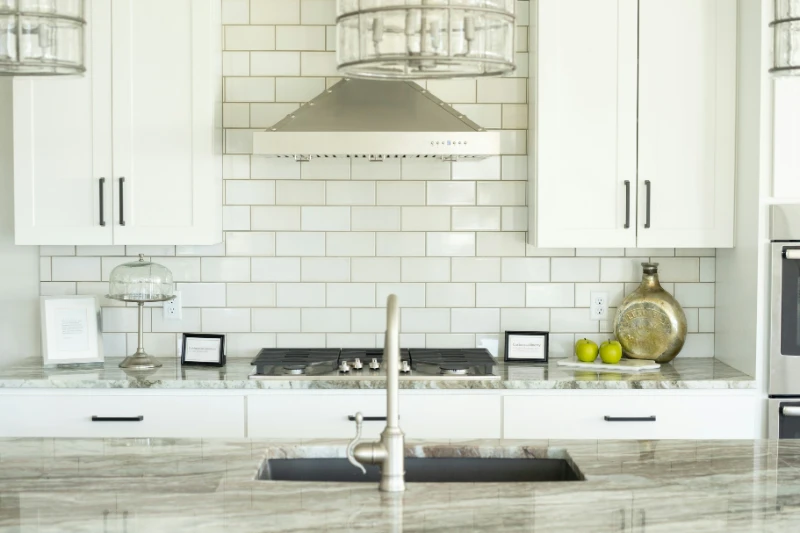
There is a particular joy in a backsplash done well, because it is pure craft on display. No cabinet doors to hide behind, no appliances breaking up the field. Just tile, grout and the installer's judgment, running the full length of your wall where everyone can see it. It is also the most cost-effective transformation in the kitchen world: one weekend of work, years of people saying "I love your kitchen" when they mean the tile.
The options have exploded past the old subway-or-nothing days. Handmade-look ceramics with edges that catch light differently on every tile. Zellige with its watery, imperfect glaze that makes a wall feel alive. Natural stone, glass, large-format porcelain with barely-there grout lines. Each one asks something different of the installer, and the difference between a good tile setter and a great one lives entirely in the details you almost cannot name.
Laid true, grouted crisp
Tile installation is unforgiving in the way only visible craft can be. The wall gets prepped flat, because tile follows the wall's truth and a wavy wall makes even perfect tile look drunk. Layout gets planned from the focal point outward, so cut tiles land symmetrically at the edges instead of one sad sliver on the right side. Outlets get centred in tiles or on grout lines deliberately, never accidentally.
Around your countertops, the bottom course meets the stone with a clean caulked joint, not grout, because houses move and grout cracks. Inside corners get the same treatment. The top edge, where tile meets cabinet or open wall, gets finished with intention: a Schluter profile, a pencil trim, or a clean grout line, decided before the first tile goes up, not improvised at the end.
Choosing your tile
Subway tile endures because it is honest: affordable, classic, and the offset pattern forgives a lot. Stack it vertically or in herringbone and the same tile goes modern. Handmade-look and zellige tiles bring variation that photographs beautifully and hides the sins of imperfect walls, at the cost of more lippage to manage. Large-format tiles mean fewer grout lines and a calmer wall, but demand a flatter substrate.
Grout colour is the secret decision. Matching grout disappears and lets the tile shape speak; contrasting grout turns the pattern into the star. In a working kitchen, mid-tone grout hides turmeric and tomato better than bright white, and epoxy grout, while pricier, shrugs off stains that would haunt cement grout. We will show you samples against your actual counters in your actual light.
- Ceramic, porcelain, glass, zellige and natural stone
- Subway, herringbone, stacked and custom patterns
- Stain-resistant grout options
- Outlet and switch plate coordination
- Beautiful finale to any remodel
Questions, answered
Most kitchen backsplashes take one to two days: one for setting tile, another for grouting after the thinset cures. Complex patterns and natural stone add time.
Sometimes, if it is sound and flat. But removal is usually worth it: it lets us fix the wall properly and avoids thickness issues around outlets and the counter joint.
Large-format porcelain with epoxy grout. Fewer grout lines, nothing porous. Behind the range, a slab of your countertop material eliminates grout entirely where the splatter lives.