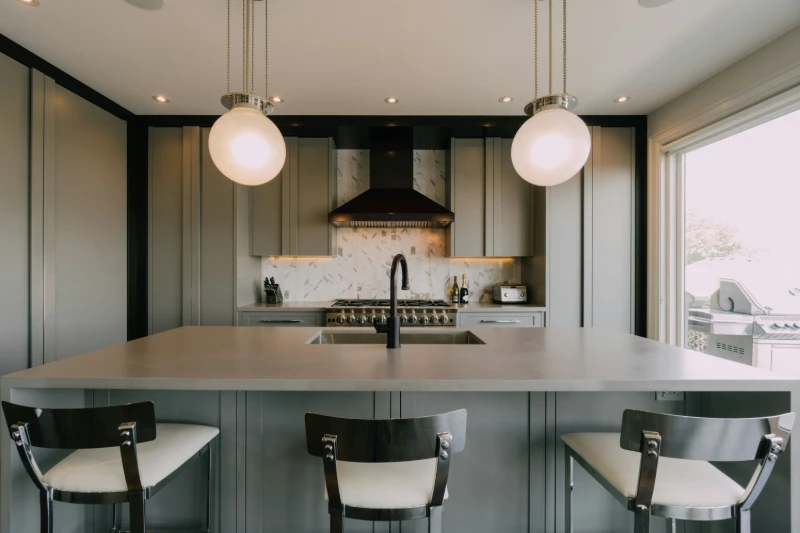
Most kitchens are lit like interrogation rooms: one harsh fixture in the middle, shadows exactly where you chop. Then someone installs under-cabinet strips as an afterthought and suddenly the room has a pulse. Lighting is the cheapest transformation in renovation and the most skipped, which tells you something about how we undervalue what we cannot touch.
Good kitchen light works in layers. Task light where the work happens, so you are not chopping in your own shadow. Ambient light that fills the room without glare. Accent light that makes the backsplash glow and the glass cabinets earn their keep. And crucially, each layer on its own control, because the light you need at 7am with coffee is not the light you want at 8pm with friends.
Designed around your hours
We start by asking when you are actually in the kitchen. The morning rush needs bright, honest light at the counters, no warm dimming romance while you are packing lunches. Evening cooking wants warmth that does not fight the food's colours. Late-night fridge raids want a path, not a stadium. A lighting plan that respects these different kitchens-within-the-kitchen changes how the room feels more than any single fixture.
Placement is everything. Recessed lights positioned over work zones, not in a thoughtless grid. Pendants hung so they light the island without blinding the person across from you, the bottom of the shade at about eye level when seated is the rule of thumb people always get wrong. Under-cabinet lighting tucked to the front of the cabinet so it washes the counter, not the backsplash. Every switch and dimmer exactly where your hand expects it.
Fixtures with character
Pendants are the jewellery, and scale is where people go wrong. Two generous pendants beat three timid ones over most islands. Materials matter in Manitoba's dry winters: metal and glass are forgiving, fabric shades collect everything. Black fixtures ground a light kitchen; brass warms a dark one; mixed metals work if one clearly leads.
Colour temperature is the invisible decision. Around 3000K reads warm and welcoming for most kitchens; 2700K gets cosy but can yellow your whites; 4000K is honest for task areas but clinical as the main event. Dimmers are non-negotiable, they turn one lighting plan into five moods. And every bulb should be LED now, the quality finally caught up with the efficiency.
- Layered lighting plans: task, ambient, accent
- Pendant, recessed and under-cabinet installation
- Dimmer switches and smart controls
- Fixture selection guidance
- The perfect partner to a new backsplash
Questions, answered
Roughly one per two feet of island, but scale matters more than count. Oversized pendants in pairs look better than a row of small ones. We will mock up the spacing before anything is ordered.
Often yes. Under-cabinet lighting, pendant swaps and dimmer upgrades are among the highest-impact small projects we do. Recessed lights depend on attic access and ceiling type.
3000K is the sweet spot for most Brandon kitchens: warm enough to feel welcoming, honest enough to cook by. Task areas can go slightly cooler; dining zones slightly warmer.